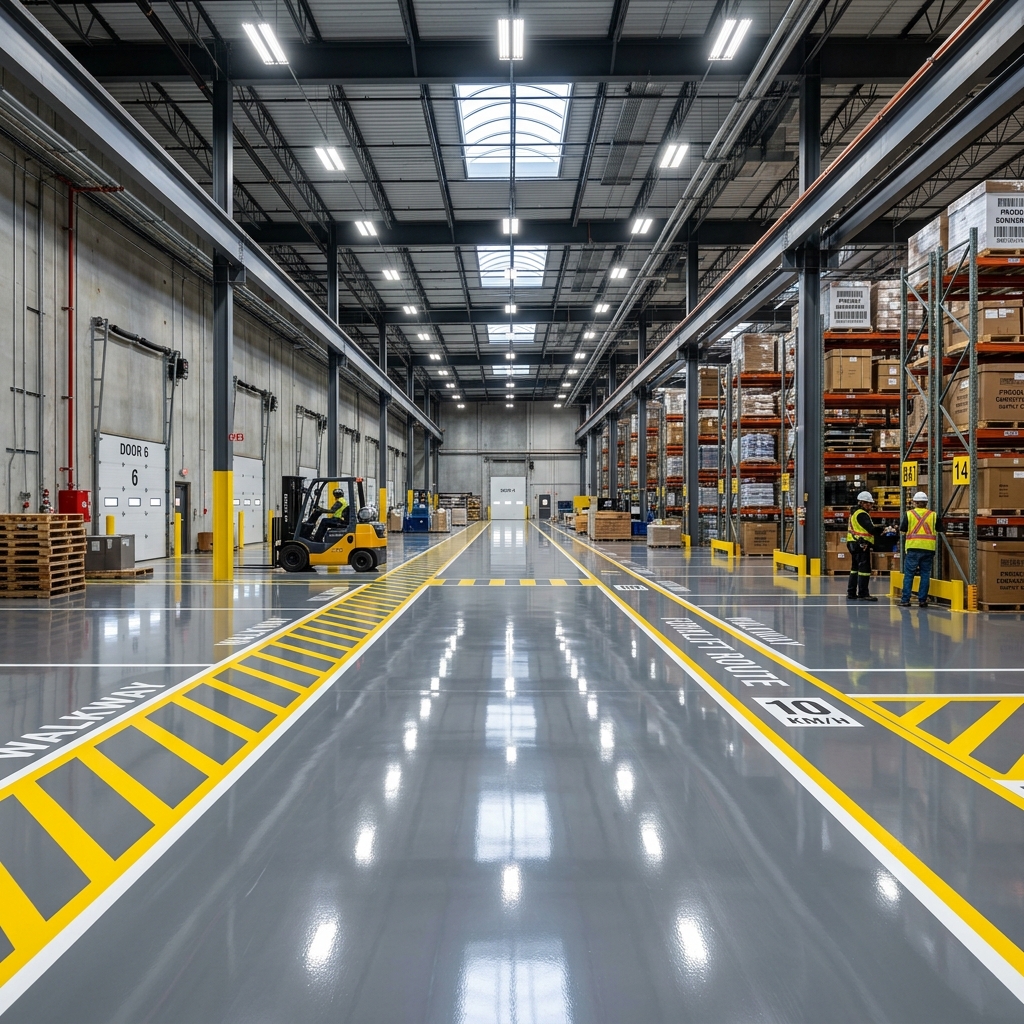
When researching concrete floor coatings for your Edmonton garage, basement, or business, you will inevitably encounter two terms: Epoxy and Polyaspartic.
Many contractors strongly push one over the other. The truth is, both are incredible industrial resins, but they possess distinctly different chemical properties. At YEG Epoxy, we believe the key to a perfect floor isn't choosing just one—it's understanding how to use them together to combat the unique challenges of the Alberta climate.
What is Epoxy?
Epoxy has been the industry standard for decades. It is a two-part thermosetting resin consisting of a polymer and a hardener. When mixed, a chemical reaction occurs that creates an incredibly hard, rigid plastic-like surface.
The Pros of Epoxy:
- Incredible Adhesion: Because epoxy cures relatively slowly, it has time to seep deeply into the pores of diamond-ground concrete, acting as a phenomenal primer and moisture vapor barrier.
- High Build: Epoxy is thicker than polyaspartic, making it excellent for filling minor imperfections, divots, and leveling a floor.
- Cost-Effective: Generally speaking, 100% solids epoxy is less expensive to manufacture than polyaspartic resin.
The Cons of Epoxy:
- UV Sensitivity: Epoxy is not UV stable. If exposed to direct sunlight over the years, a clear epoxy topcoat will yellow or amber.
- Rigidity: Once fully cured, epoxy is extremely stiff. In a climate like Edmonton, where concrete expands and contracts radically between -40°C in the winter and +30°C in the summer, pure epoxy can sometimes become brittle and crack.
What is Polyaspartic?
Polyaspartic aliphatic polyurea (often shortened to just Polyaspartic) is a newer, highly advanced resin technology initially developed to protect steel bridges from rust.
The Pros of Polyaspartic:
- 100% UV Stable: A polyaspartic clear coat will never yellow, making it the perfect topcoat for exterior patios or garages with windows.
- Extreme Flexibility: It is significantly more elastic than epoxy. This flexibility allows it to expand and contract with your concrete during Alberta freeze-thaw cycles without cracking.
- Chemical Resistance: Polyaspartic is impervious to road salts, magnesium chloride, oils, and harsh chemicals.
- Fast Cure Times: It cures rapidly, allowing contractors to complete a garage in just 1-2 days and allowing you to drive your car on it shortly after.
The Cons of Polyaspartic:
- Fast Cure Times: Wait, isn't that a pro? Yes, but it cures so fast that it often doesn't have the time to seep deeply into raw concrete. As a base coat, it can sometimes fail to achieve optimal adhesion if the concrete isn't prepped perfectly.
- Cost: It is a more expensive raw material than traditional epoxy.
The YEG Epoxy Solution: The Hybrid System
Why choose when you can have the best of both worlds? At YEG Epoxy, our signature installation process utilizes a Hybrid System.
For our most popular vinyl flake systems, we use a 100% Solids Industrial Epoxy Base Coat. This allows the resin to penetrate deeply into the open concrete pores overnight, creating an iron-clad bond and acting as a dense moisture barrier.
Then, after broadcasting the aesthetic flakes, we seal the entire system with a High-Gloss Polyaspartic Topcoat. This provides the UV stability, extreme chemical resistance, and flexibility needed to survive Edmonton winters.
Want to Learn More?
Our team is always happy to talk shop. If you want a floor coating that leverages the strengths of both epoxy and polyaspartic resins, reach out to YEG Epoxy today.
Get Your Free Hybrid Coating Quote